
Used Weltmeister Piano Accordions: Which Models Are a Good Buy, and Which to Skip
Weltmeister accordions were made in Klingenthal, Germany, most of them in East German times. As a rough guide: small Serino, Perle and Seperato models are children's instruments, the many Stella and other mid-sized models vary a lot and need checking, and the cassotto models (Supita, Supra, Cassotto 374/414, S5) are the serious ones. Condition matters more than the name: check the bellows, the wax and every note before you pay.
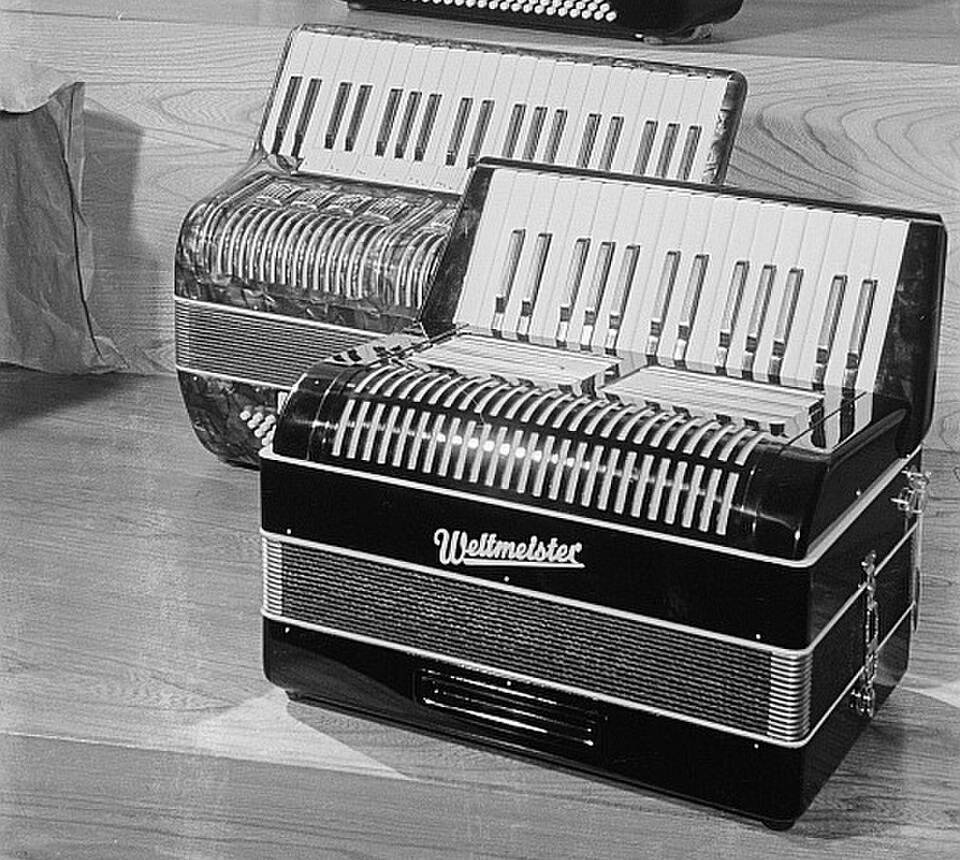
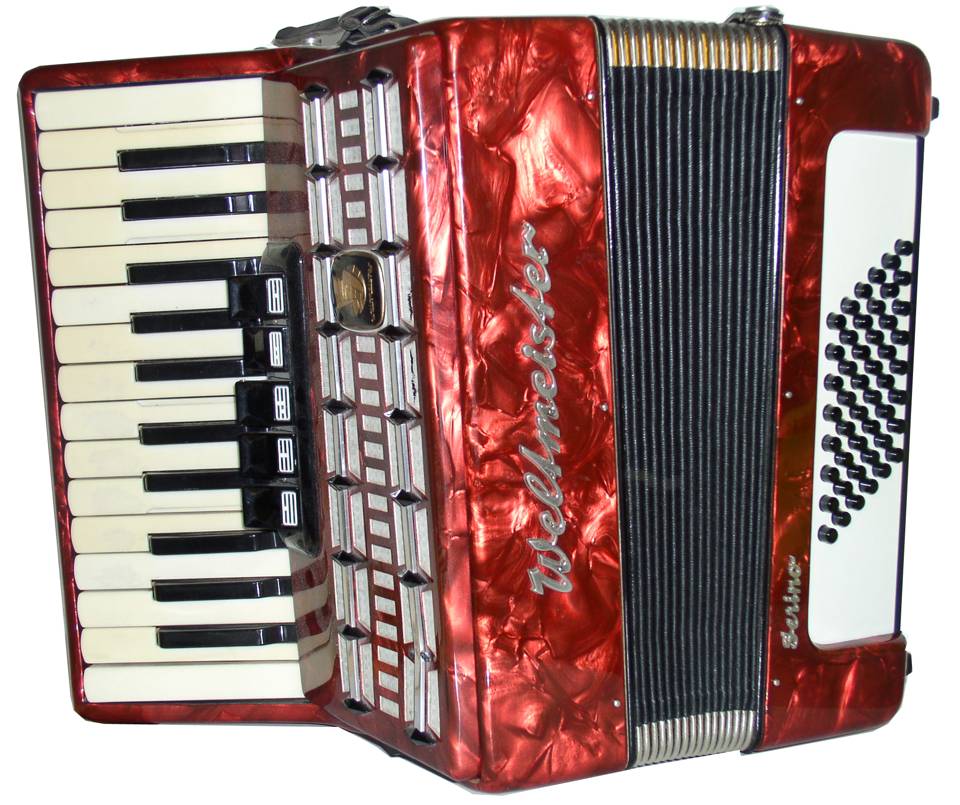
If the accordion in the listing says WELTMEISTER in curly script across the grille, you're looking at one of the most common accordions on the used market. Weltmeister means "world champion" in German, and for decades it was the accordion brand of East Germany.
That's good news and bad news. Good, because there are plenty of them, parts and know-how exist, and some are lovely instruments. Bad, because quality varied a lot over seventy years, and a cheap old Weltmeister can need more work than it's worth. This guide helps you tell which kind you've found.
A short history
Weltmeisters come from Klingenthal, a small town in Saxony on the Czech border that has made harmonicas and accordions since the nineteenth century.
- 1949: East Germany merged the town's private makers into one state factory, VEB Klingenthaler Harmonikawerke. Weltmeister was its accordion brand.
- 1950s to 1980s: the factory made accordions in huge numbers for export. In 1961 alone it built over 125,000 and sold them to more than 40 countries. That's why so many turn up today.
- 1990s: after German reunification the factory was broken up, and a new company, Harmona, carried on making Weltmeisters.
- 2017: after Harmona's insolvency, the business restarted as the Weltmeister Akkordeon Manufaktur.
- 2023 to 2024: the Manufaktur filed for insolvency in 2023 and stopped production in late 2024. As far as we could find, nobody has restarted it since, so a "new" Weltmeister on sale today is most likely old stock.
So a used Weltmeister can be from any of three eras: East German (1949 to 1990), Harmona (1990s to 2010s) or the Manufaktur (2017 to 2024).
First, read the model code
Weltmeisters usually carry a model name (Stella, Topas, Supita…) and often a code that tells you the size. The code reads treble keys / bass buttons / reed sets / treble registers / bass registers. For example:
If there's no code, count the keys and bass buttons yourself, and look at the register switches above the keyboard: the most dots you see in one switch's circle roughly tells you the number of reed sets.
The Weltmeister piano accordion models
Here are the piano accordion lines you're most likely to meet. The sizes come from dealers' specifications. Most lines came in several sizes, so always check the code or count for yourself.
| Model | Sizes you'll see | Weight (approx.) | What it is |
|---|---|---|---|
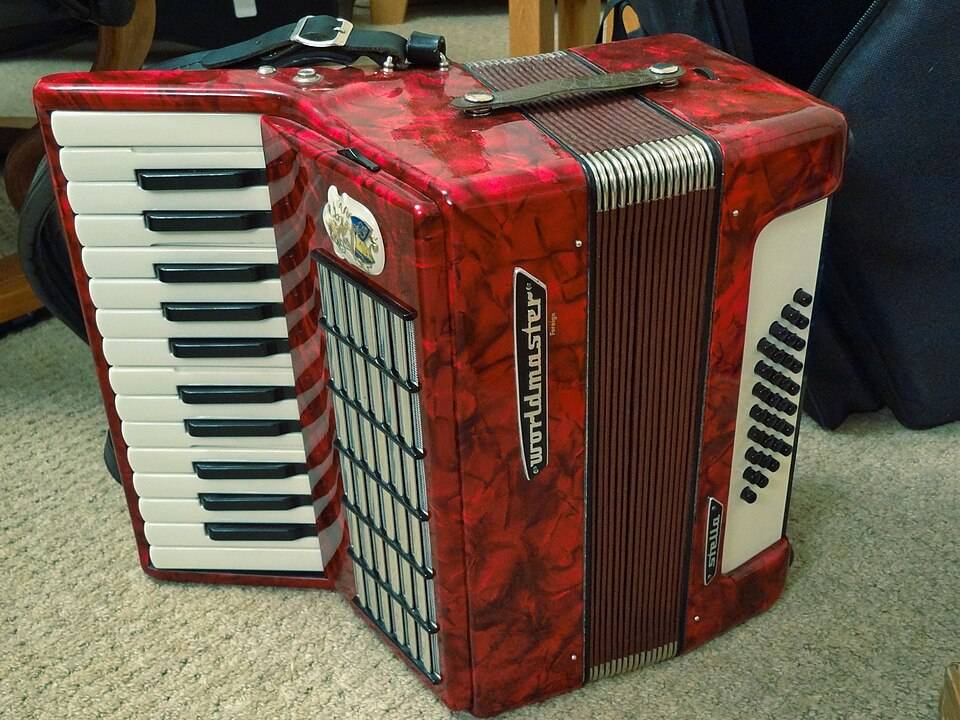
| Serino | 32 to 120 bass, often 26/48 or 30/60 | 7 kg (30/60) | Dealers describe it as an entry and mid-range line of the 1970s and 80s. The small ones are children's instruments. |
| Perle, Seperato | 26 keys, 48 bass, 2 reed sets | about 6 kg | Small, light instruments for children. |
| Stella | 32 to 120 bass, often 34/48 to 37/96 | 7.75 kg (34/48) to 9.4 kg (37/96) | One of the most common post-war lines, from beginner to intermediate level. |
| Rubin, Kristall, Juwel | 30 keys, 60 or 72 bass | about 6 kg (Juwel) | Smaller modern models. |
| Achat, Meteor | 34 keys, 72 or 80 bass, 3 reed sets | about 8 kg | Mid-sized. |
| Opal, Topas, Amigo | 37 keys, 96 bass, 3 or 4 reed sets | 8 to 10 kg | Larger mid-sized. |
| Caprice, Saphir, Consona | 41 keys, 120 bass, 4 reed sets | 10 to 12 kg | Full size. |
| Supra, Supita, Cassotto 374 / 414, S5 | 37 to 41 keys, 96 to 120 bass, 4 or 5 reed sets, with cassotto | 10 to 12.6 kg | The top of the range. A cassotto is a sound chamber inside the treble side that gives a warmer, rounder tone. |
Good buy or bad buy?
Here's how we'd sort the Weltmeisters you're most likely to meet in a listing.
Fine for a child, not worth big repairs: Serino, Perle, Seperato
A small Weltmeister that plays well, holds air and is cheap can be a good first accordion for a child. If it needs real work (new valves, re-waxing, tuning), walk away: the bill will be several times what it's worth.
Check carefully: Stella and the other East German mid-sizes
These are the Weltmeisters you'll see most. Players' opinions are mixed: a technician on one accordion forum called the old East German ones "not great", though better than some cheap modern student instruments, and others describe them as stiff and uneven from one to the next. The common faults on old ones are out-of-tune reeds, worn valve leathers, brittle reed wax and tight bellows. A well-kept Stella can be a fine instrument for a learner. A neglected one usually isn't worth fixing.
Look closely at the bellows and reed blocks: recent models
Owners of some recent Weltmeisters have reported bellows corners whose coating flaked off and made the bellows leak, and reed blocks that became sticky. These are owners' reports, not a rule, but they're exactly what to check: run your fingers over the bellows corners, and do the air test from our used accordion checklist.
Worth servicing: the cassotto models
A Supita, Supra, Cassotto 374 or 414 or S5 is a serious full-size instrument. If one is in good order, it can be a very good buy, and if it needs a service it's usually worth doing. At 10 to 12.6 kg they're heavy, though: if you're small or just starting, read what size accordion should I buy first.
One thing to know about parts
Weltmeisters use standard parts, and their reeds generally came from Czech or Italian reed makers, so a good technician can work on one. But with the factory closed, original parts may take longer to find, especially in the US. Ask your technician before you buy one that needs work.
Poco listens as you play and tells you when it's right. Opening soon.
Join the waitlistHow old is my Weltmeister?
There's no published table of Weltmeister serial numbers, so dating one takes a little detective work:
- "Made in GDR", "Made in East Germany" or "Made in German Democratic Republic" on a plate or label means it was made between 1949 and 1990.
- "Made in Germany" with no mention of East Germany usually means after 1990.
- Square-ended "waterfall" keys or black plastic key tops are often signs of an older instrument, from around the 1950s.
- The serial number may include the year after a slash on some older ones, but there's no confirmed rule. A technician who knows Weltmeisters can usually date one by its construction.
Weltmeister vs Hohner
Both are German, and you'll often see them side by side in listings. But they're different companies from different sides of the old border: Hohner from Trossingen in West Germany, Weltmeister from Klingenthal in the East. Neither name guarantees a good instrument on its own: both made cheap student models and fine professional ones. Our old Hohner accordion guide covers Hohner's models the same way.
Five things to check on a Weltmeister
- Read the plate. "Made in GDR" or "East Germany" means 1949 to 1990; ask the seller what they know about where it's been since.
- Feel the bellows corners. Run a finger over each metal or plastic corner. Flaking coating or soft spots mean air leaks.
- Play every note both ways. A note that's silent on the push or the pull, or buzzes, often means brittle wax or a loose reed inside.
- Try the register switches. Each one should click firmly and change the sound. A switch that changes nothing usually means a stuck register slide, so some of the reeds you're paying for may never sound.
- Ask about the last service. On a full-size or cassotto model, a recent service with a receipt is worth real money. If it's never been serviced, ask a technician what it would cost before you agree a price.
For the full fifteen-minute check, our used accordion checklist goes through everything step by step.
A good Weltmeister is a sturdy, honest instrument with a lot of history in it. Find the right one, and it'll serve you well.
Ask a question
Stuck on something in this guide, or want to know more? Ask us. We read every question, and answer the most useful ones right here on the page.
Poco is your complete accordion teacher. It shows you every step, listens as you play and tells you when it's right. Poco opens soon: join the waitlist and be among the first to play.
Join the waitlist