
Old Hohner Piano Accordions: Which Models Are a Good Buy, and Which to Skip
Hohner made piano accordions at every level, from cheap Student models to the hand-built Gola. As a rough guide: Student models are rarely worth repairing, Verdi, Tango and Concerto are solid everyday instruments if they've been looked after, Morino is a professional instrument worth servicing, and a Gola is top of the range. Whatever the model, condition matters more than the name: check the bellows and every note before you pay.
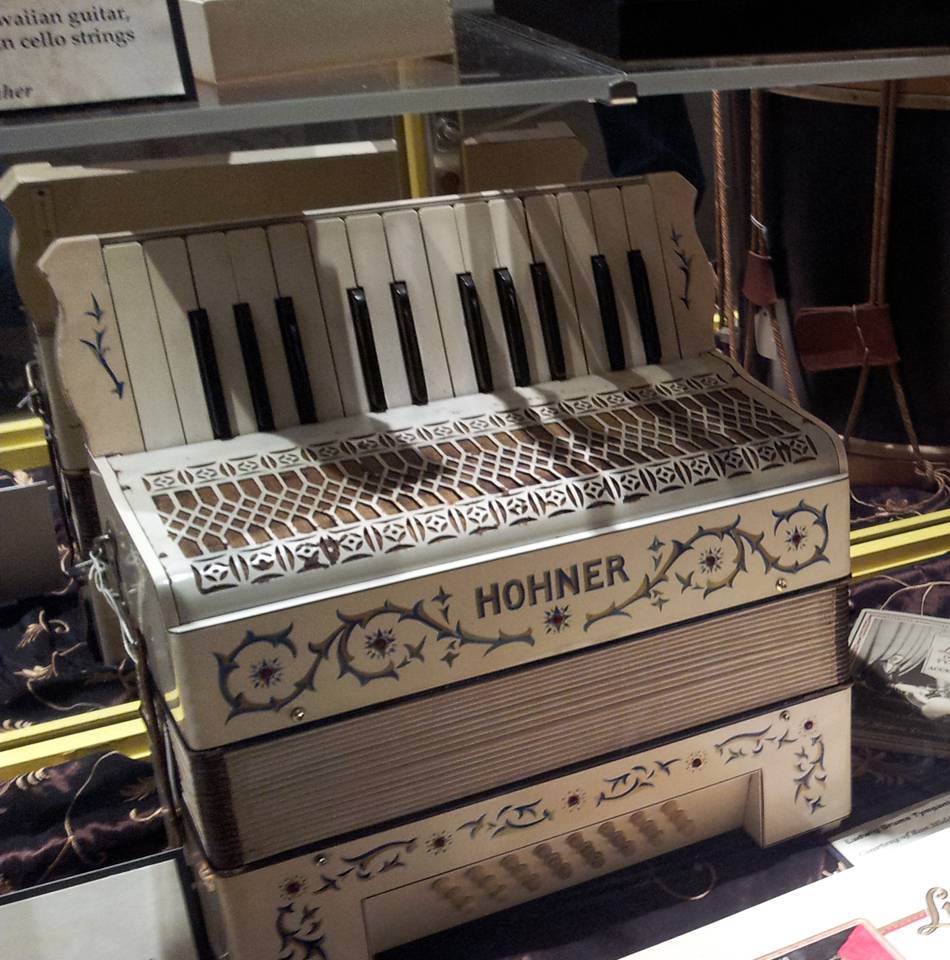
If the old accordion you've found says HOHNER across the front, you're in good company. Hohner is one of the best-known accordion names in the world, and there are an awful lot of them out there.
The company started in 1857, when Matthias Hohner began making harmonicas in Trossingen, a small town in Germany's Black Forest. Hohner has been building accordions since 1903, and through the twentieth century it made them in enormous numbers, for every kind of player from a seven-year-old beginner to a concert soloist.
That's exactly why "it's a Hohner" doesn't tell you much on its own. A Hohner Student and a Hohner Gola share a name and almost nothing else. This guide will help you work out which one you're looking at, and whether it's worth the money.
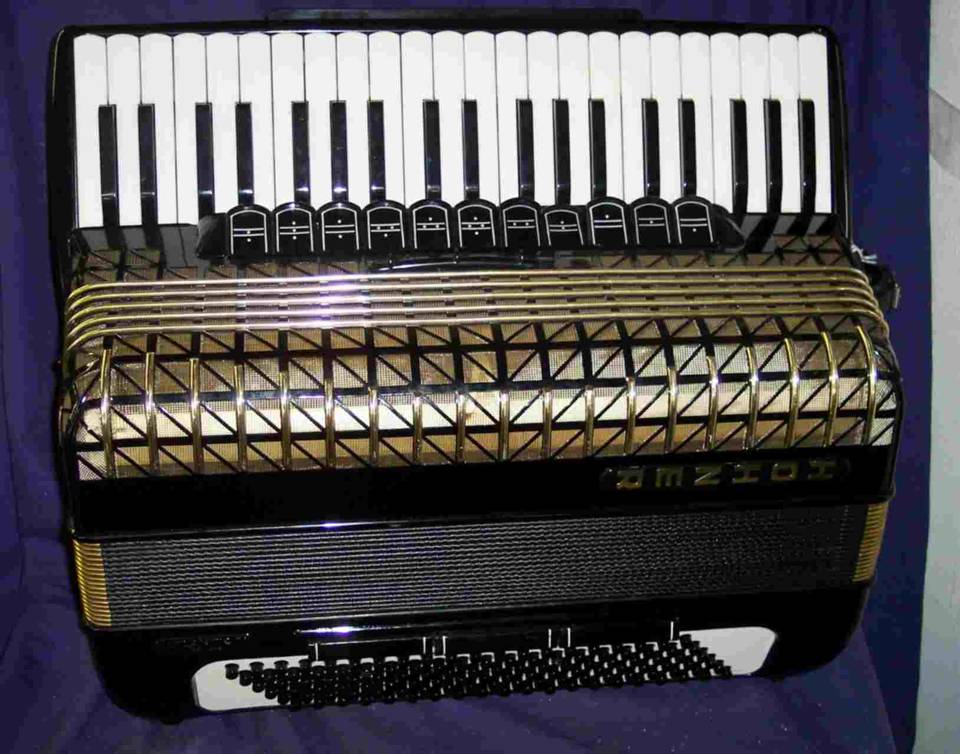
First, find the model name
Most Hohners have the model name somewhere on the outside: on the grille, on a badge on the treble side, or on the top near the keyboard. Look for words like Student, Verdi, Tango, Concerto, Atlantic, Lucia, Morino or Gola, usually followed by a Roman numeral, and sometimes a letter (Verdi II M, Morino IV S, Atlantic IV N de Luxe).
The Roman numeral usually rises with the size of the instrument and the number of reed sets, but Hohner wasn't strictly consistent about it, so don't rely on it alone. Count for yourself:
- Treble keys. 25 or 26 keys is a small instrument, 34 or 37 is mid-sized, 41 is full size.
- Bass buttons. 12 to 48 is small, 72 to 96 is mid-sized, 120 is full size. (New to the bass side? Here's how the bass buttons work.)
- Reed sets. Look at the register switches above the keyboard. Each switch shows a little circle with dots in it; the most dots you see on any switch roughly tells you how many sets of reeds the treble side has. Two is a basic instrument, three is typical, four or five is a serious one.
The Hohner models, from student to professional
Here's how the main piano accordion lines compare. The sizes and dates come from Hohner's own list of historical models; the opinions on quality are ours, and those of the players and technicians who work on these instruments.
| Model | Typical size | Made | What it is |
|---|---|---|---|
| Student (I to V, later Student 40, 72, 96…) | 22–26 keys, 8–48 bass, 2 reed sets (bigger later ones exist) | late 1930s onward | Hohner's entry-level line. Simple and light, built to a price. |
| Starlet | 26 keys, 40 bass | 1970s onward | A small children's model. |
| Concerto (I to IV) | mostly 26–34 keys, 48–72 bass, 2–3 reed sets | mid-1950s onward | A step up from Student: a good small to mid-sized instrument. |
| Verdi (I to V) | 34–41 keys, 48–120 bass, 2–4 reed sets | mid-1930s to 1980s | The dependable middle of the range. Well built, and well regarded by players. |
| Tango (I to VI) | 34–41 keys, 48–120 bass, 3–4 reed sets | mid-1930s onward | Mid-range, with many musette (wavy-tuned) versions. |
| Lucia (II to IV) | 37 keys, 80–96 bass, 3–4 reed sets | 1950s to 1970s | A mid-sized model with a metal body. |
| Atlantic (III, IV) | 41 keys, 120 bass, 3–4 reed sets | 1950s onward | A full-size, metal-bodied model with a bright, sharp sound. One you'll see often. |
| Morino (IV, V, VI and others) | mostly 41 keys, 120 bass, 4–5 reed sets | from 1938 to the present | Hohner's professional line. |
| Gola | 41–45 keys, 120–185 bass, 4–5 reed sets | since 1956 | The top of the range, largely hand-built. Rare, and the one everyone hopes to find. |
Hohner made many other models over the years (Carmen, Imperial, Arietta, Organola, Marchesa and more), mostly in the 1930s to 1950s. The same rules apply: count the keys, basses and reed sets, and judge the condition.
Good buy or bad buy?
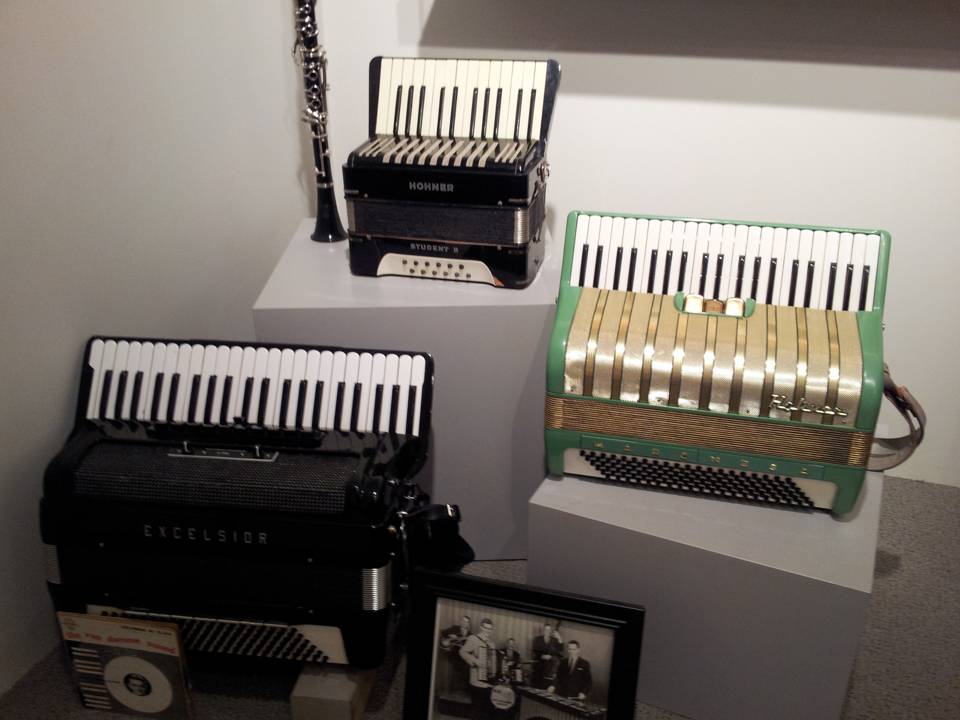
This is the question everyone actually wants answered. We can't judge an instrument we haven't seen, but here's how we'd think about each kind of Hohner.
Usually not worth it: Student models that need work
The Student line was made to be cheap, and the players and technicians who talk about Hohners online rarely have much good to say about it. A Student that plays well, holds air and is priced like a toy can be a fine first instrument for a child. But if it needs any real repair, walk away: the bill will be several times what the accordion is worth.
Often a good buy: Verdi, Tango and Concerto in good condition
These are the everyday workhorses. A Verdi in particular has a reputation among players for being sturdy and long-lasting. If one passes every check in our used accordion checklist, it can be a lovely instrument for years. If it needs a full overhaul, the sums get tighter: get a quote first.
It depends: Atlantic and Lucia
These are the metal-bodied Hohners of the 1950s and later, and you'll see plenty of them for sale. Opinion splits on them. Some players love their bright, punchy sound; some technicians prefer the wooden Verdi for its build and tone. A good Atlantic IV is a real full-size instrument, so if you like the sound and it's in good order, it can be a good buy. Just remember a full-size Atlantic is heavy: see what size accordion should I buy before you commit.
Worth servicing: Morino
A Morino is a professional instrument, and it's usually worth paying a technician to bring one back to life. An unserviced Morino at a low price can be one of the best finds in the used market, as long as you budget for the work.
The jackpot: Gola
Golas are rare, expensive and highly sought after. If you find one cheap, have it looked at by a specialist before you do anything else, and expect even a tired one to be worth restoring.
Poco listens as you play and tells you when it's right. Opening soon.
Join the waitlistWhat about price?
We won't pretend to give exact values: prices swing with condition, region and how badly the seller wants it gone. A few rules of thumb hold up well:
- Pay for condition, not the badge. A Verdi that plays perfectly is worth more to you than a Morino that needs $1,500 of work.
- Small Student models in working order are usually cheap, and should stay cheap. If one is priced like a serious instrument, keep looking.
- Full-size models (41 keys, 120 bass) that have been recently serviced are where the real value is. Ask for proof of the service: a receipt or the technician's name.
- Check recent sold prices, not asking prices, on the big marketplace sites for the exact model and size. Asking prices on old accordions are often wishful.
How old is my Hohner?
Hohner has stamped a serial number on every accordion since 1930. Look for it on the body or inside the instrument; if you can't find it, a technician can. Hohner itself offers a dating service: send them the serial number and the exact model name and they'll tell you when it left the factory, for a fixed fee, with a certificate. Their service team in Trossingen also restores vintage Hohners and keeps original parts.
Some other clues help too. Models with an "M" in the name (Verdi II M, Tango V M) were mostly made in the 1950s and 60s, and Hohner's Student and Verdi lines both go back to the late 1930s.
Hohner vs Weltmeister
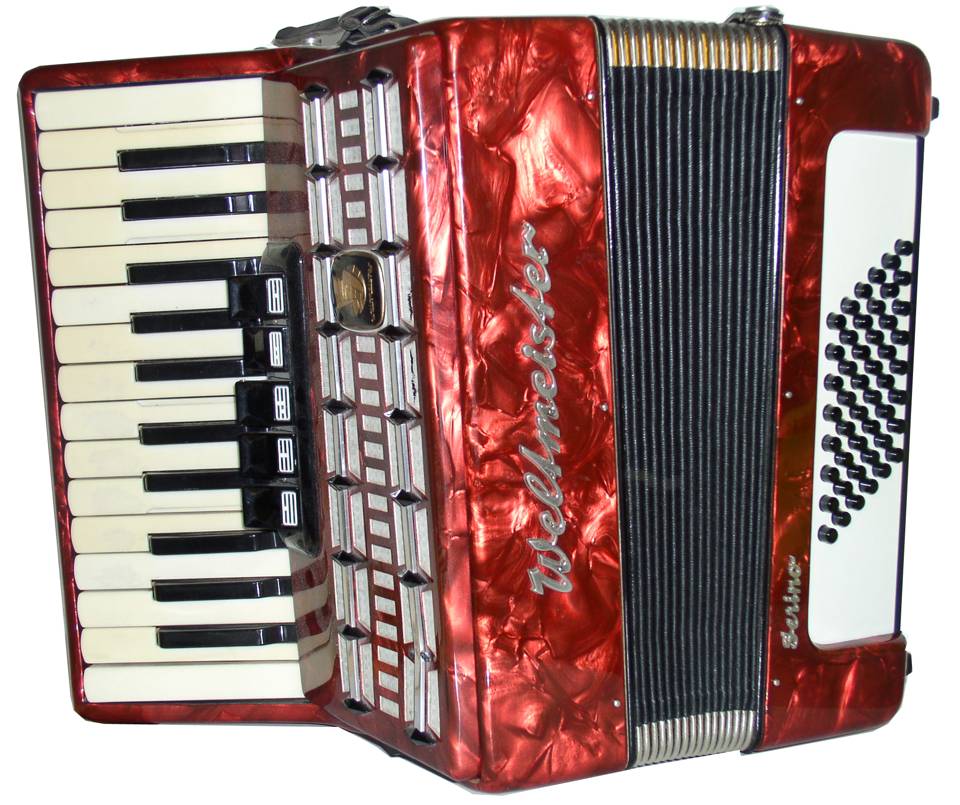
You'll often see Weltmeister accordions listed alongside Hohners, and both are German. But they're different companies: Weltmeister accordions come from Klingenthal, a town that was in East Germany for most of the twentieth century. Many are good, honest instruments, but it's a different family, so don't let a seller tell you it's "basically a Hohner." Our Weltmeister guide covers their models.
Before you hand over the money
Whatever the model, the same checks apply: the bellows should hold air with nothing pressed, every note should speak on the push and the pull, nothing should stick, and it shouldn't smell of damp. Our used accordion checklist walks you through it step by step, in about fifteen minutes.
A good old Hohner is a wonderful thing to own. Find the right one, and it'll still be playing long after the next owner has found it in your closet.
Ask a question
Stuck on something in this guide, or want to know more? Ask us. We read every question, and answer the most useful ones right here on the page.
Poco is your complete accordion teacher. It shows you every step, listens as you play and tells you when it's right. Poco opens soon: join the waitlist and be among the first to play.
Join the waitlist